
Air Polishing for Implants: What You Need to Know
Implant maintenance requires delicate care to protect the titanium surface and surrounding tissue. Air polishing has become one of the most recommended methods for implant hygiene due to its minimally abrasive and highly effective biofilm removal.
Why Air Polishing Is Ideal for Implants
1. Protects Titanium Surfaces
Air polishing powders such as glycine or erythritol are gentle and do not scratch implant surfaces.
2. Removes Biofilm Efficiently
Implants accumulate biofilm differently from natural teeth—air polishing removes it uniformly and safely.
3. Minimally Invasive
No scraping, which means less discomfort and reduced inflammation.
4. Reaches Complex Implant Areas
Angled nozzles allow access around:
-
Abutments
-
Crowns
-
Bridges
-
Implant-supported prostheses
Best Powders for Implant Maintenance
-
Erythritol (14–20 μm) – safest for implants
-
Glycine (20–25 μm) – very gentle and effective
Recommended Workflow
-
Assess peri-implant tissue
-
Apply a disclosing agent
-
Air polish with low-abrasion powder
-
Ultrasonic clean only where necessary
-
Rinse and evaluate tissue response
Choosing the Right Device
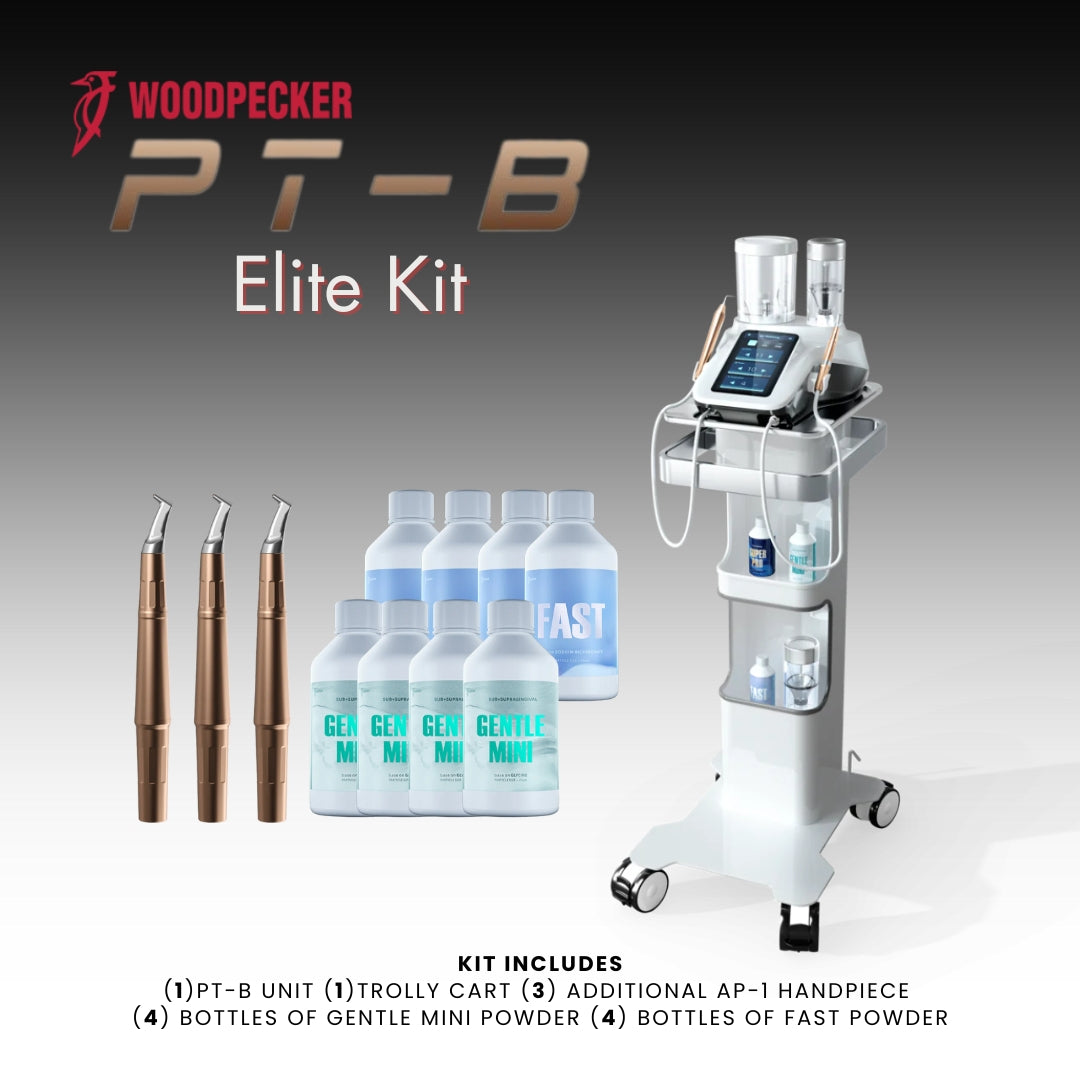
Devices like the Woodpecker PT-B include:
-
Specialized subgingival nozzles
-
Compatible powder chambers
-
Comfort temperature settings
-
Dedicated implant-safe ultrasonic tips
Conclusion
Air polishing offers the safest and most effective method for maintaining implants long-term. Incorporating this technique enhances both peri-implant health and patient comfort.
1 comment
Amy Dawson
Didn’t realize air polishing was that gentle on implants. Makes sense why it’s becoming more popular.